

 বাংলা


 যুব ও ক্রীড়া মন্ত্রণালয়
Field Test Launched for EARN Project Beneficiary Identification

Field Test Launched for EARN Project Beneficiary Identification
Field testing for beneficiary identification under the Economic Acceleration and Resilience for NEET (EARN) project commenced on 7 July 2026. For this purpose, a total of five teams — comprising project officers and consultants — have simultaneously begun work across different upazilas, selected on the basis of Bangladesh's diverse geographic and demographic characteristics.
The upazilas selected for the field test are:
Naikhongchhari (Bandarban) — Hill tract region and ethnic minority communities
Morelganj (Bagerhat) — Climate-vulnerable coastal area
Sreemangal (Moulvibazar) — Haor and tea garden area
Ulipur (Kurigram) — Riverine char area
Singair (Manikganj)
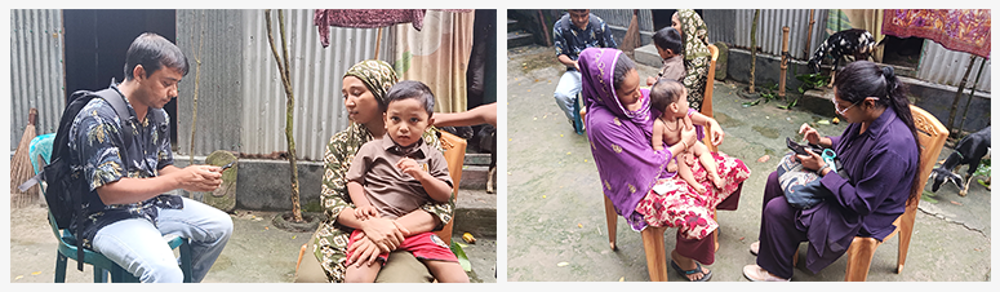
Under the EARN Project, 900,000 NEET (Not in Education, Employment or Training) youth — 60 percent of whom are young women — will be integrated into economic and social activities, enabling them to contribute to Bangladesh's economic transformation and growth.
With grant support from the Government of Bangladesh and loan assistance from the World Bank, the project will provide skills training, long-term employment opportunities, and entrepreneurship support — including microfinance — in demand-driven, appropriate, and environmentally friendly sectors.
The 900,000 youth — both young men and women — who are not in education, employment, or training are the primary target beneficiaries of the EARN Project. The project covers six categories of beneficiaries, each of whom will receive training in different ways:
1. Approximately 500,000 NEET youth at the grassroots level (including 300,000 women) will receive skills development training along with Socio-Emotional Behavior (SEB) and Enterprise Development Training (EDT).
2. 200,000 NEET youth (including 120,000 women) who hold SSC/HSC or higher qualifications and have received or are currently receiving technical or vocational training from any institution will be provided with SEB and EDT training.
3. 100,000 NEET youth (including 60,000 women) who have dropped out at the secondary level will be provided with the opportunity to re-enter existing educational programs under the Open University.
4. 50,000 NEET youth (including 30,000 women) from registered youth clubs in 250 upazilas covered under the project will receive leadership training.
5. 25,000 NEET youth (including 15,000 women) will be provided with online training.
6. 25,000 youth from disadvantaged communities — including third-gender individuals, persons with disabilities, residents of remote areas, marginalized communities, and areas with special needs — will receive financial support through projects approved from the Innovation Fund to improve their socio-economic conditions.
Read More

Review Meeting Held on EARN Project Inception Reports
A review meeting on the inception reports prepared by the Service Providers (SPs) engaged under the Economic Acceleration and Resilience for NIT (EARN) Project, implemented by the Department of Youth Development (DYD), was held on Saturday, 5 September.
 8 September, 2026


Launch of the EARN Project Portal
The Secretary of the Ministry of Youth and Sports, Md. Mahbub-ul-Alam, formally inaugurated the online portal of the EARN Project, being implemented by the Department of Youth Development. The inauguration was declared on Tuesday, 28 July, at 11:30 AM in the Ministry's conference room, where the Secretary officially launched the portal by pressing the designated button.
28 July, 2026

Workshop on Priority Skills Identification & Online Training Content Development
A workshop titled 'Identifying Priority Skills and Online Training Content Development (OTSP)' was held on 15 July 2026 at the project office under the Economic Acceleration and Resilience for NEET (EARN) project. The primary objective of the workshop was to identify and validate the priority skills — including technical skills, digital literacy, soft skills, and entrepreneurship development — and content categories required for the online training of 25,000 NEET youth out of the project's total 900,000 beneficiaries.
16 July, 2026

A New Era of Youth Administration Through Information Technology & Real-Time Monitoring
Youth administration is being comprehensively restructured through the integration of fully digital and modern technologies, with the aim of ensuring transparency and accountability in government project implementation and delivering services more efficiently.
6 July, 2026

Department of Youth Development's 'Seed Fund' to Create 15,000 New Entrepreneurs for Youth
Even after receiving technical training, many rural youth are unable to start businesses due to a lack of capital and proper guidance. To address this financial and strategic challenge faced by rural youth, the Department of Youth Development (DYD) has undertaken a major initiative to modernize and expand its existing Seed Fund. Through the EARN Project, this fund is being made fully digital and adapted to meet the demands of the modern era.
6 July, 2026

Training of Trainers (ToT) held for EARN Project
A day-long Training of Trainers (ToT) on ‘Beneficiary Identification and Selection’ was held on August 27, 2026 in the seminar room of Economic Acceleration and Resilience for NEET (EARN) project office, implemented by the Department of Youth Development.
30 August, 2026

Women Prioritized in the EARN Project — Rural Social Barriers to Be Addressed
The NEET youth challenge in Bangladesh is fundamentally a gender issue. Of the 12.6 million NEET youth, approximately 90 percent are women. A World Bank study found that rigid social norms, lack of safe transportation, and the disproportionate burden of domestic responsibilities are the primary barriers preventing women in rural areas from becoming economically self-reliant.
6 July, 2026

Breaking Free from Unemployment: A Landmark Employment Project Coming for 12.6 Million NEET Youth
To ensure the economic advancement of Bangladesh's vast youth population and to reintegrate young people outside the mainstream of employment and education, the government has launched a landmark mega project.
6 July, 2026

Workshop on the Development of the Communication Strategy Paper
A workshop titled 'Stakeholder Consultation Workshop' has been held under the 'Economic Acceleration and Resilience for NEET (EARN)' project of the Department of Youth Development.
1 July, 2026